CASE STUDY
Revolution Victor
AI-AUGMENTED WORKFLOW & PREMIUM APPAREL PRODUCTION
1. THE CHALLENGE (The Why)
America's 250th anniversary isn't just a calendar date; it’s a cultural moment. I wanted to build a piece of apparel that felt like it actually belonged in that moment. Not a novelty shirt. Not clip art on cotton. I wanted something with weight to it, both visually and conceptually.
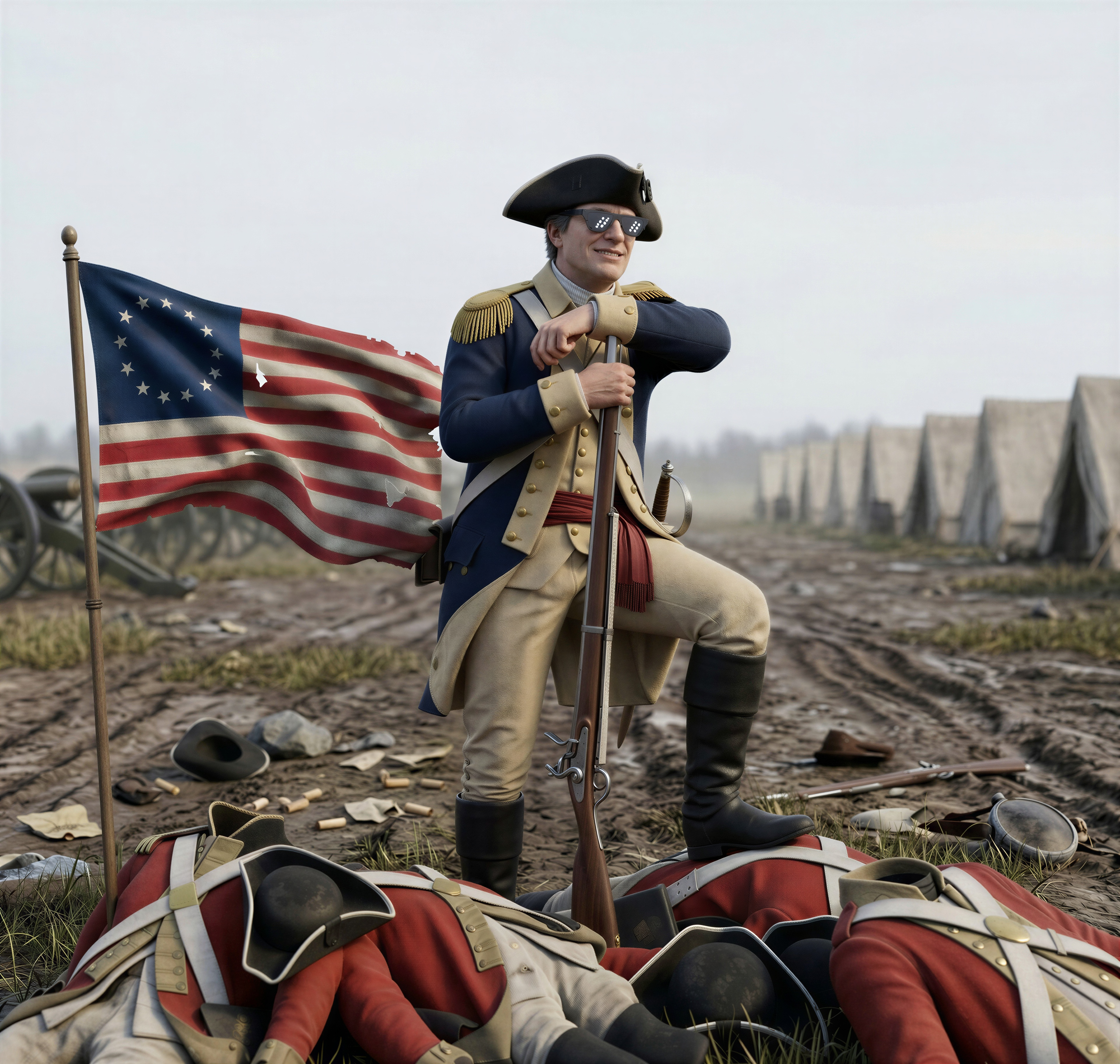
The vision behind Revolution Victor was straightforward: a patriotic design rooted in real history but alive in the present. I envisioned a Continental soldier who looks like he just won, standing on a battlefield with the Betsy Ross flag and the confidence of someone who knew exactly what he was fighting for. The sunglasses weren't an accident; they are the wink that tells you this isn't a museum piece.
The real challenge was proving the workflow: that AI ideation could move all the way from a generative image to a production-quality screen print without losing anything in translation. That gap between what AI produces and what actually ships on a garment is where most people quit. I didn't.
2. THE PROCESS (The Why)
Ideation. I used Flux/Nano Banana 2 to generate the source image, which was a photorealistic 3D render of a Revolutionary War soldier with a period-accurate uniform, Betsy Ross flag, battlefield environment, and cinematic lighting. The prompt work was deliberate. I wasn't fishing for something usable; I was directing toward a specific visual outcome. The result was a hero image with the kind of quality you'd expect from a commercial illustrator rather than a stock library.
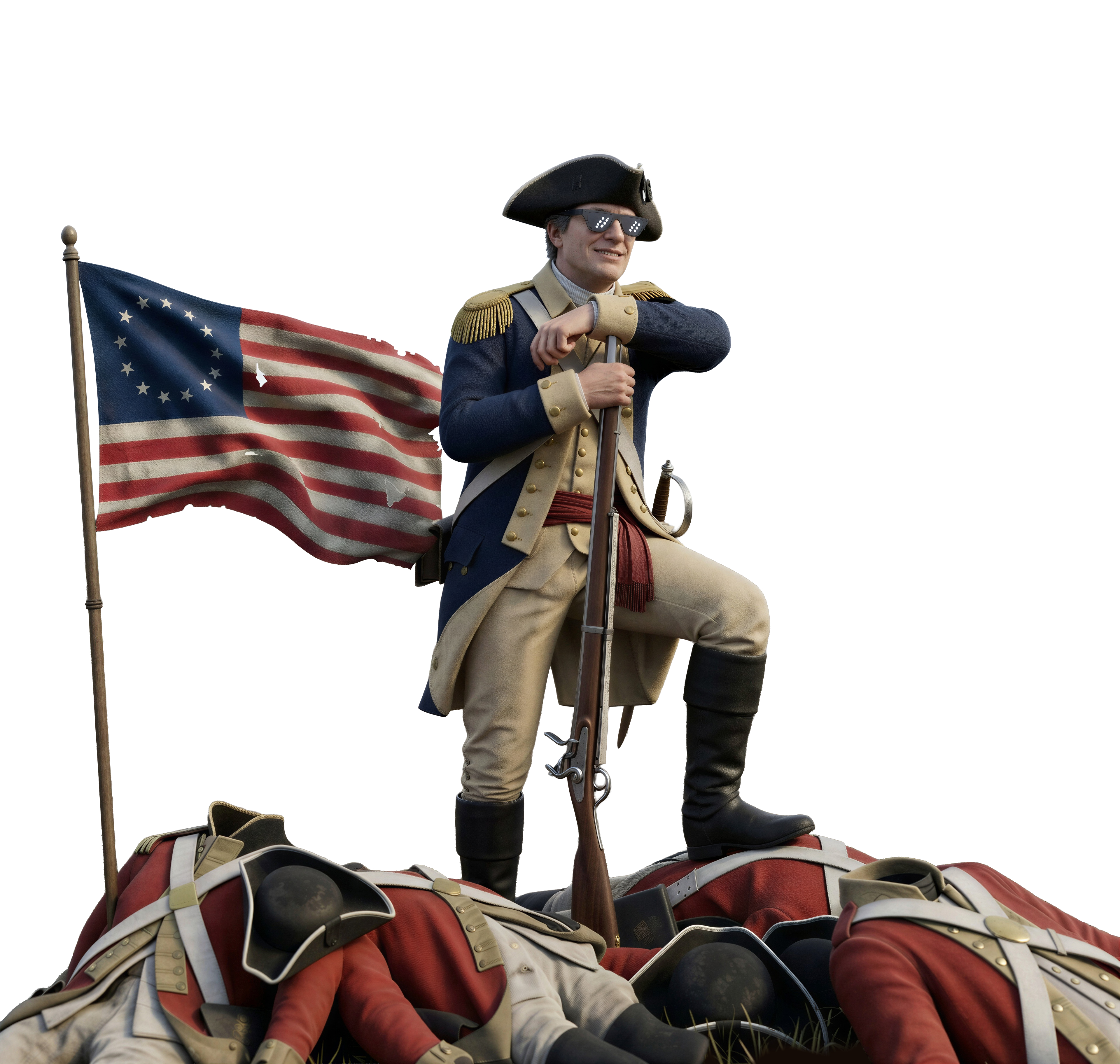
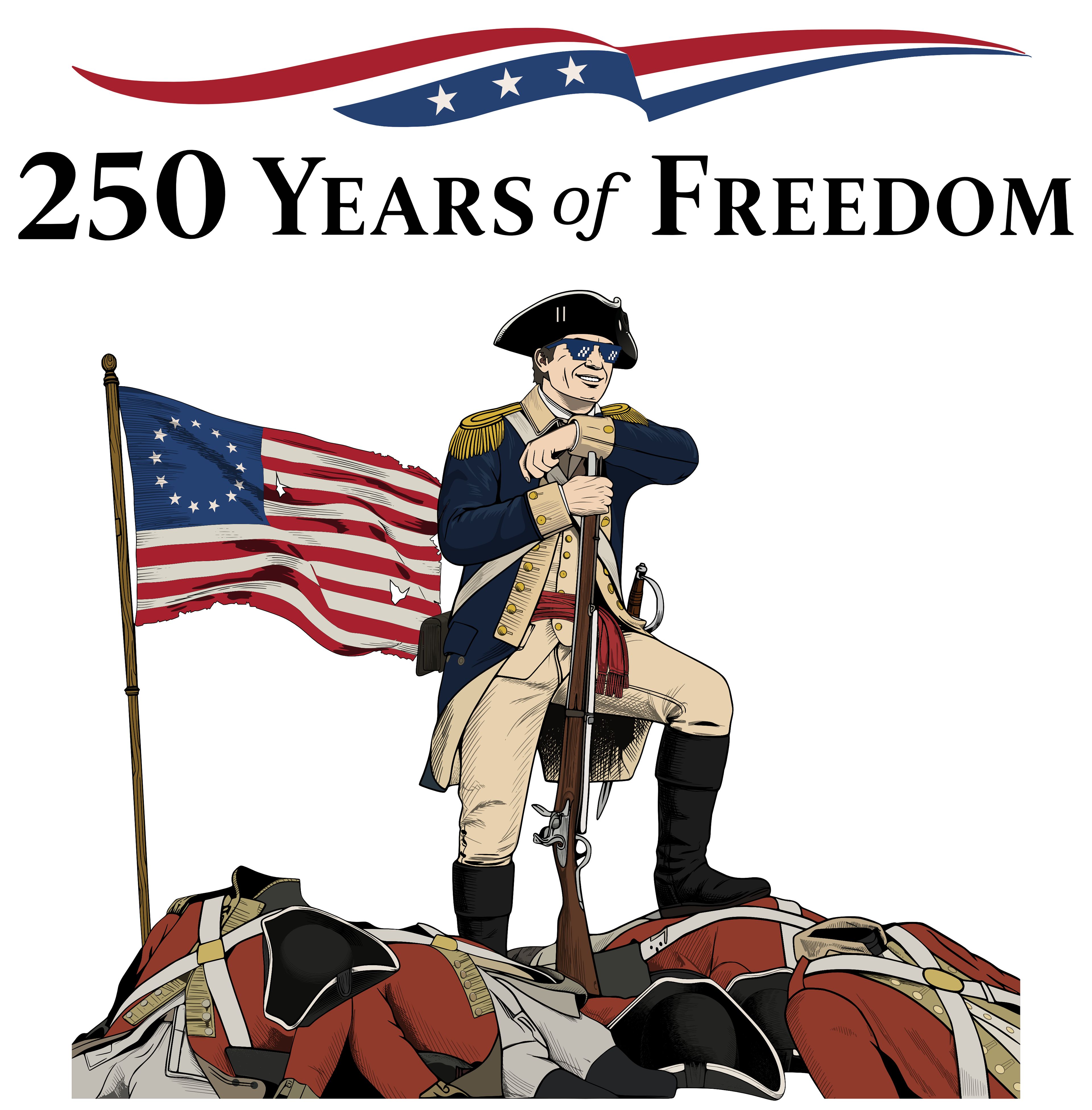
Refinement. From there, I moved into Adobe Photoshop to isolate the figure, manually removing the background and cleaning the edges for print use. Once the asset was clean, I converted it to a vector in Adobe Illustrator, traced the form, and separated the color channels for screen printing. What started as a generative render became a production-ready, multi-color print file.
Systematization. Repetitive decisions in the design-to-print pipeline, such as color separation logic, file prep, and sizing for different garment templates, were handled through documented agentic workflows that I've built into my process at Kingdom Creations. The goal is always the same: reduce the manual load on steps that don't require creative judgment so I can focus on the steps that do.
IMAGE GENERATION: Flux / Nano Banana 2
BACKGROUND REMOVAL: Adobe Photoshop
VECTORIZATION: Vector Witch & Adobe Illustrator
COLOR SEPARATION: Manual · Multi-channel
OUTPUT METHOD: Screen printing
WORKFLOW AUTOMATION: Agentic AI pipeline
3. THE EXECUTION (The Result)
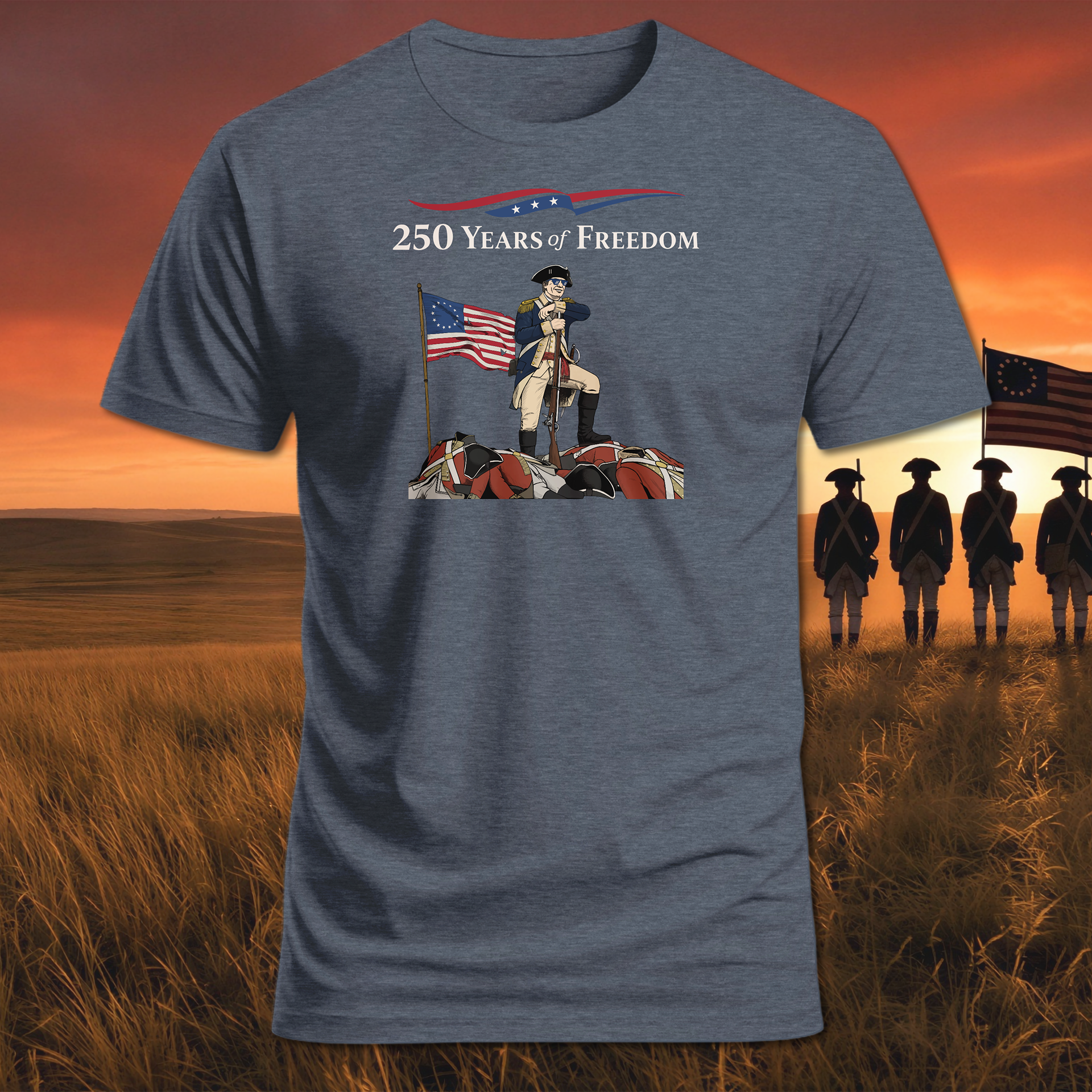
Screen printing was the right call for this design. The bold linework and defined color breaks translate perfectly to ink on fabric. This results in the kind of crisp, high-contrast print you see on retail-quality apparel instead of promotional giveaways. The garment selection was intentional: a premium blank with the proper weight, creating a shirt that holds its shape and holds its print.
The finished product is exactly what it was supposed to be: a statement piece tied to a once-in-a-generation cultural moment, built from scratch using a modern creative workflow that didn't exist five years ago.
4. VISUAL CHECKLIST
[x] The prompt/seed — AI-generated source image (Revolution Victor, Flux/Nano Banana 2)
[x] The workflow — software/hardware stack documented above
[x] The hero shot — high-quality photo of finished garment (with close-up on print texture)