I'm a creative director, brand strategist, and Al content specialist based in Buffalo, Wyoming. Across two decades of organizational leadership and content creation, everything I build is anchored to a single conviction: story is the ultimate leverage.
What began as hands-on graphic design and custom manufacturing through my studio, Kingdom Creations, has evolved into a sophisticated, systems-first fluency in Al-powered visual production. I don't just prompt Al tools; I direct them. From engineering absolute character consistency across complex narratives to building and protecting a brand's unique visual DNA, I transform emerging tech into precise, high-impact creative assets that connect with audiences.
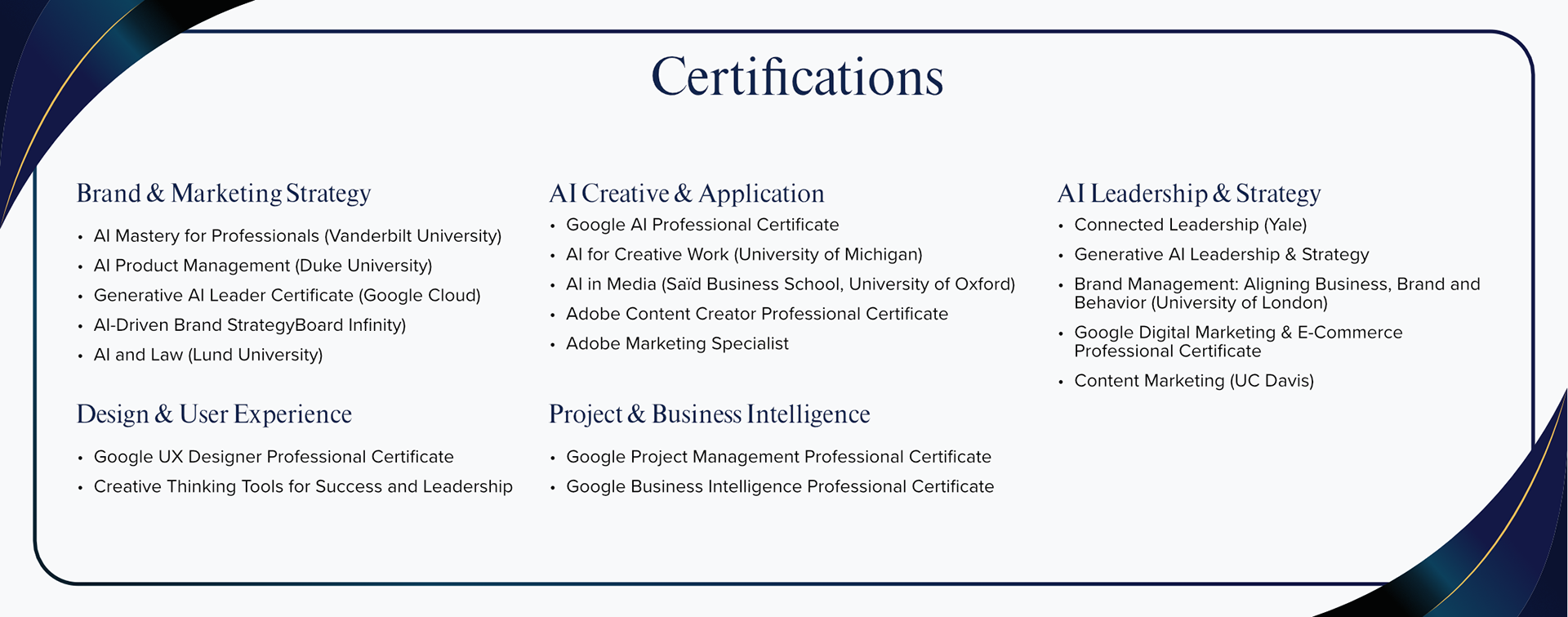
This creative execution is grounded in relentless professional optimization. To bridge the gap between creative intuition and business reality, I hold core professional credentials in Generative Al Leadership from Vanderbilt, Brand Management from the University of London, and Google Professional Certificates in both Project Management and Digital Marketing & E-commerce.
I don't just generate images. I engineer scalable creative systems with intention, blending twenty years of leadership insight with the absolute frontier of visual and operational technology.

Creative Director's Statement
Some businesses already have a brand story. A real one, with history and texture and something worth saying. When that's the case, my job is to find it, sharpen it, and build every creative decision outward from that center. The story already exists. I just have to make sure the work reflects it.
When there's no story yet, the work starts earlier. That means asking harder questions: what does this business actually stand for, who are they talking to, and what do they want that person to feel? I don't start designing until I can answer those. The visual work is downstream of the strategic work, and trying to skip that step is how you end up with something that looks fine but says nothing.
That two-track approach shapes everything I do, from brand identity & product photography to AI image generation & content strategy. Amplify what's already there, or build from the ground up when it isn't. The tools change depending on the project. The thinking doesn't.
My background is in organizational leadership. Two decades of communicating vision to people, figuring out what matters, why it matters, and how to say it in a way that actually lands. That instinct carries directly into creative work. Good brand communication isn't decoration. It's a clear point of view expressed with intention.
What I bring to a creative role is a combination that doesn't always show up in the same person: the strategic instinct to know what a brand needs to say, the visual fluency to direct how it gets said, and the technical range to work across traditional & AI-assisted production. I'm comfortable in a brief and comfortable in a build. I think in systems. And I have a feel for what makes an image or a message actually work.
I'm looking for work where that full range is useful, where creative direction means more than managing aesthetics, and where moving quickly between strategy and execution is genuinely valued.

d
d